The 10 Hidden Risks in Lithium-Ion Battery Sourcing
The biggest risks in lithium-ion sourcing almost never show up during the tender — they surface later, during scale-up, execution, or market tension. From geographic concentration to financial fragility and regulatory speed, this article breaks down the 10 weaknesses buyers routinely miss. BuyStep® turns this into a data-driven, multi-risk approach that helps secure your battery projects for the long run.

The 10 Hidden Risks in Lithium-Ion Battery Sourcing
The lithium-ion battery market has become one of the gravity centers of the global energy transition. Stationary storage, grid infrastructure, electric mobility, decarbonized industry: batteries now directly shape the stability and profitability of modern energy projects.
But behind this spectacular growth lies a much more complex reality.
In lithium-ion batteries, the biggest risks are almost never visible during a tender. They show up later — during industrialization, scale-up, operation, or when global tension really intensifies.
That's exactly what's transforming battery sourcing today. The question is no longer just buying high-performing cells — it's securing a global industrial system that has become extremely fragile, concentrated, and under permanent pressure.
The Lithium-Ion Market Is Structurally Under Pressure
Global demand is exploding. According to the International Energy Agency, battery needs could multiply several times by 2030, driven by electric vehicles, energy storage, and energy transition infrastructure. This surge puts massive pressure on the whole value chain: extraction, refining, cell production, assembly, and global logistics.
The result: tension becomes structural. In several European energy storage projects, industrial players have recently seen lead times stretch by several months on critical cells whenever Asian production capacity came under heavy strain. Many companies still approach battery sourcing like a standard industrial purchase — that approach is becoming dangerously inadequate.
Risk #1: Geographic Dependence
One of the biggest risks in the lithium-ion market is the geographic concentration of the value chain. A dominant share of refining, cell production, and certain critical components is still concentrated in a few global industrial zones. This creates major vulnerability to geopolitical tension, export restrictions, logistics disruption, and regulatory shifts.
The most advanced companies now precisely map component origin, critical dependencies, and their suppliers' real geopolitical exposure. Diversification is becoming a strategic subject.
Risk #2: Raw Material Volatility
Lithium, nickel, cobalt, graphite, copper: batteries depend heavily on extremely volatile commodity markets. This volatility directly weakens suppliers. In several recent tension phases, some manufacturers saw their margins strongly compressed by sudden material cost spikes — leading to quality pressure, reduced industrial investment, delays, or cash flow tension.
A supplier able to offer a very competitive price may sometimes be operating on a much more fragile financial balance than it appears.
Risk #3: Real Quality Is Hard to Measure
Two batteries with similar technical specs can produce radically different performance over time — because real quality depends on much deeper factors: cell uniformity, process stability, thermal management, quality control, and aging behavior. Some differences only show up after several years of operation.
In several stationary storage projects, significant degradation gaps have been observed between systems that looked relatively similar on paper. The most mature companies now look at field history, operational feedback, long-term performance, and real process stability.
Risk #4: Industrial Capacity Is Often Overstated
In a fast-growing market, many suppliers now announce extremely ambitious industrial capacity — but theoretical and actually available capacity can be very different. Under pressure, weaknesses appear quickly: saturated lines, delays, client prioritization, or excessive dependence on critical subcontractors.
The most advanced organizations now dig much deeper into process stability, industrial flexibility, line redundancy, and a supplier's real ability to absorb sustained scale-up.
Risk #5: Supply Chain Opacity
The lithium-ion value chain is extremely complex. A manufacturer itself depends on refiners, active material producers, electronics suppliers, and multiple critical subcontractors — and this chain often remains very opaque. Many industrial players still have limited visibility into real component origin, secondary dependencies, or hidden geographic weaknesses.
This opacity sharply raises the risk of supply disruption, non-conformity, and geopolitical tension. The most resilient companies are now developing much more advanced supply chain mapping.
Risk #6: Underestimated Logistics Constraints
Lithium-ion batteries carry very specific logistics constraints: sea transport, safety regulations, storage, customs, and handling requirements make flows much more sensitive than in other industrial sectors. In several energy projects, logistics itself has become a critical factor of project drift.
The most advanced companies now evaluate logistics robustness, flow resilience, and a supplier's real ability to maintain deliveries despite global disruption.
Risk #7: Financial Fragility Among Suppliers
The battery market attracts many new entrants showing extremely rapid growth — but behind that dynamic can hide real weaknesses: heavy reliance on outside financing, weak cash generation, or industrial investments that are hard to sustain.
In such a capital-intensive sector, financial stability becomes a critical indicator. A weakened player can quickly cut quality investment, slow down support capacity, or face industrial continuity issues. This matters especially in multi-year financed projects, where supplier bankability is tied directly to long-term financial stability.
Risk #8: Accelerating Regulation
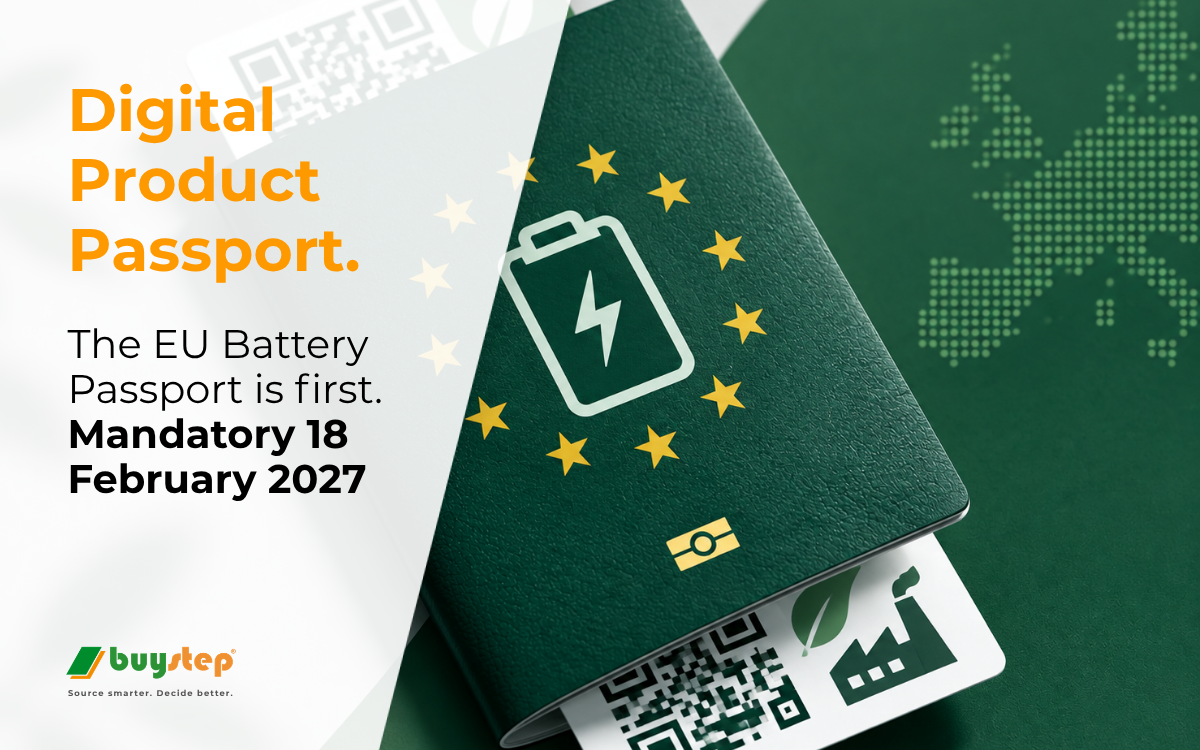
The regulatory framework around batteries is evolving extremely fast. Europe is currently reinforcing traceability requirements, carbon obligations, ESG criteria, and recycling constraints — the European battery passport is a clear example. Some suppliers risk not being able to keep up with these new requirements fast enough, creating non-compliance risk, financial constraints, or restricted market access.
Battery sourcing must now include a long-term regulatory view, not just an immediate technical logic.
Risk #9: Technological Obsolescence
The lithium-ion market evolves extremely fast. New chemistries, higher energy density, evolving system architecture, and software optimization regularly reshape industrial standards. This creates real risks: quickly outdated solutions, limited compatibility, or reduced support over time.
Companies must now evaluate not only a solution's current performance, but also its capacity to stay relevant over several years.
Risk #10: Traditional Procurement Approaches Are Becoming Obsolete
This is probably the most underestimated risk. In many companies, battery sourcing is still largely driven by price, certifications, and advertised theoretical performance. In such a complex environment, that logic is no longer enough.
The most advanced organizations now build much broader approaches integrating multi-risk analysis, supply chain visibility, industrial robustness, financial stability, and continuous supplier monitoring. The real challenge is no longer just buying batteries — it's durably securing critical energy infrastructure.
BuyStep® Turns Battery Sourcing Into a Strategic Steering System
In modern energy projects, the difficulty is no longer accessing battery manufacturers. The real challenge is quickly identifying the suppliers able to stay stable despite industrial tension, regulatory constraints, geopolitical dependencies, and global lithium-ion market volatility.
That's exactly the logic BuyStep® is built on. Rather than a simple sourcing platform, BuyStep® acts as a strategic supplier intelligence infrastructure, helping industrial and energy players steer their battery decisions through a data-driven, multi-risk approach: dynamic supplier scoring, supply chain visibility, industrial robustness analysis, risk monitoring, energy qualification, and operational resilience assessment.
The goal is no longer simply comparing offers — it's durably securing projects, investments, and future energy continuity.
Conclusion
Lithium-ion battery sourcing has become a major strategic issue in modern energy projects. Behind a fast-growing market lie industrial, logistics, financial, and regulatory risks that are often heavily underestimated.
Companies that keep evaluating suppliers mainly through price, certifications, or theoretical performance expose themselves to significant weaknesses in an environment now under permanent tension. Organizations able to analyze overall supplier robustness — financial stability, supply chain resilience, industrial maturity, ESG compliance, and operational continuity — will hold a decisive competitive advantage in securing their future energy projects.
In lithium-ion, real procurement performance is no longer about buying a high-performing battery — it's about securing the whole industrial ecosystem needed to keep it running durably.
द्वारा Thierry C.